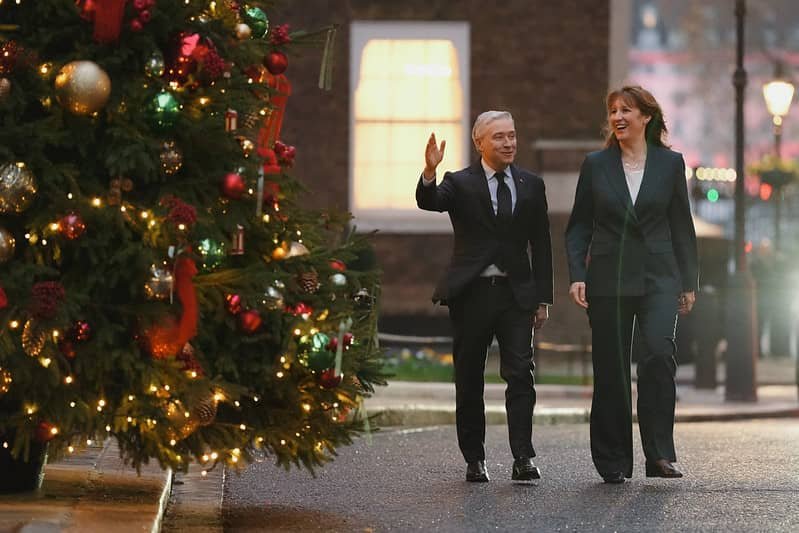

Public sector borrowing data offers Chancellor Rachel Reeves some Christmas cheer. Picture by Ben Dance / FCDO.
Sterling helped by some rare good news on the government borrowing front.
The British pound holds its post-Bank of England gains as markets digest new retail sale and government borrowing figures.
There was some cheer for Chancellor Rachel Reeves on Friday after the ONS said public sector net borrowing was £11.7BN in November 2025, £1.9BN less than in November 2024 and the lowest November borrowing for four years.
The reason for the improved borrowing profile was an increase in tax take and National Insurance contributions, said the ONS.
Compare Currency Exchange Rates
Find out how much you could save on your international transfer
Estimated saving compared to high street banks:
£25.00
Compare Rates from Leading Providers →
Free • No obligation • Takes 2 minutes
The figures will further reduce any risk premium that has built up in UK assets over 2025 due to fears about the state of the UK’s finances.
We have seen the pound rally following the November 26 budget as fears for a destabilising budget did not come to pass, and these data build on that theme.
The pound to euro exchange rate closed Thursday at 1.1413 after rising 0.22% on the day. Friday sees some early gains, taking the pair to 1.1420.
The pound to dollar exchange rate is flat at 1.3378, meaning it is virtually unchanged during the past two days but is still nevertheless on course for a fourth consecutive weekly advance.

Gains might have been more strident were the ONS borrowing data backed by a similar positive surprise in retail sales, which were also published Friday morning.
Here, the ONS said retail sales were -0.1% m/m in November, which is below the consensus expectation for 0.3%.
The data is consistent with growing evidence of softening consumer demand trends across the economy, which should mean inflation continues to trend lower.
The Bank of England on Thursday lowered interest rates 25 basis points to 3.75% having observed signs of weakening demand in the economy, and these retail sales numbers will verify that view.
The Bank did nevertheless warn there were signs of stubbornness in UK inflation dynamics and it would not commit to raising interest rates again in 2026.
Markets saw as many as two more rate cuts falling in H1 next year just ahead of the Bank’s Thursday decision. However, expectations show just one further cut is now expected after the Bank’s latest statement and minutes were digested.
This shift helped the pound rise on the day. However, economists we follow maintain a cautious approach to sterling’s prospects in the coming months.
“We still expect a March cut given our assumption of the disinflation progress continuing. Front-end rates can fall further and hence the pound strength we see today is unlikely to persist,” says MUFG Bank.