


The Pound-Euro sits near 1.1658 as UBS prefers Pound Sterling’s yield appeal, despite expecting no further BoE increase this year.
The British Pound to Euro (GBP/EUR) exchange rate has eased to around 1.1658, leaving Sterling’s yield advantage to compete with a softer near-term price trend.
The cross fell 0.15% over 48 hours and finished near the bottom of its 1.1657–1.1681 range, although the latest GBP/EUR rate remains 1.71% higher in 2026.
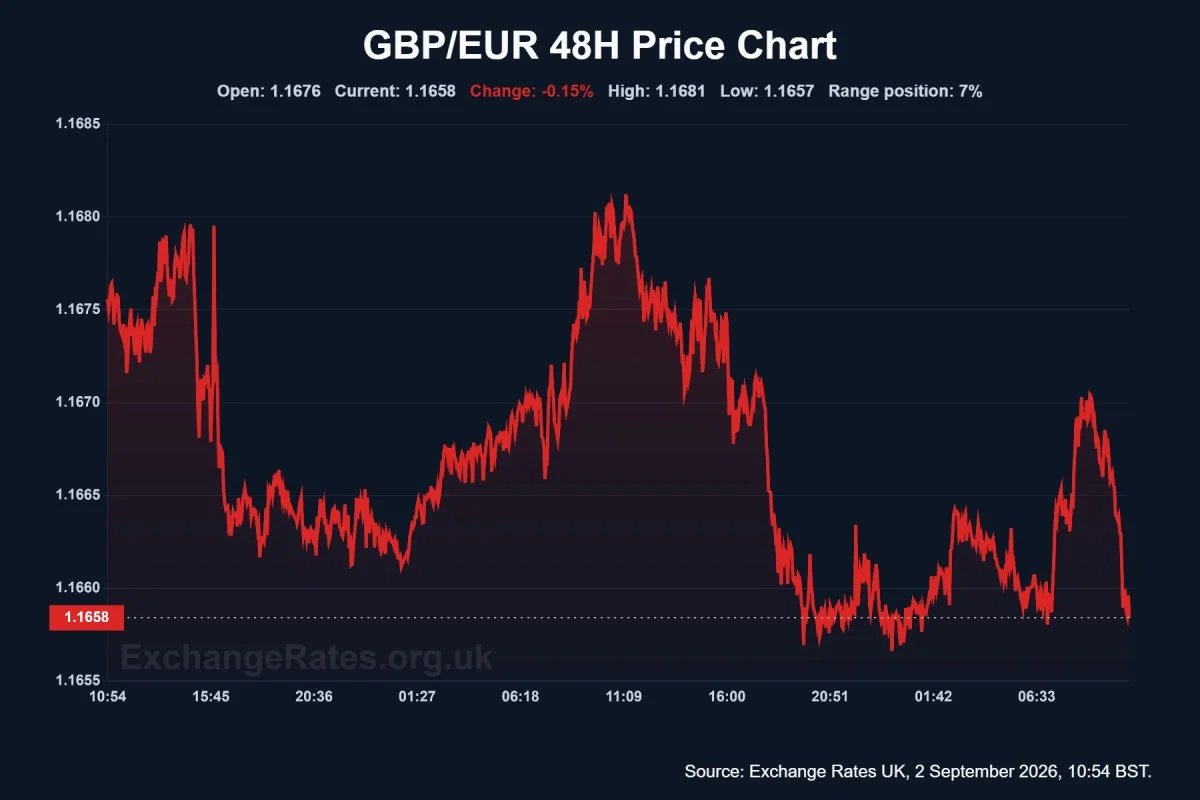

The late decline put GBP/EUR close to its two-day low rather than confirming another attempt at 1.17.
UBS Prefers Sterling’s Yield
UBS distinguishes between a currency’s relative appeal and the likelihood of another interest-rate increase.
“We remain Neutral on the EUR and expect EURUSD to move back between 1.18-1.20, while GBP and NOK remain Attractive given their yield appeal.”
The call rests on the existing level of UK rates, rather than a forecast that the Bank of England will begin a fresh tightening cycle.
“Thus, we expect the ECB to hike once more in September, to 2.5% before pausing, and the BoE to hold policy rates at 3.75% through year-end 2026.”
Even after UBS’s anticipated ECB move, that path would leave Bank Rate 1.25 percentage points above the ECB rate, preserving a sizeable carry advantage for Sterling.
Markets Price More Than UBS
The wrinkle is that investors have turned more hawkish than UBS’s base case as rising oil prices revive UK inflation concerns.
Recent GBP/EUR market pricing showed roughly 32 basis points of BoE tightening by year-end, with a November increase judged almost 70% likely.
That extra policy premium can support the Pound, but it also raises borrowing costs and leaves Sterling vulnerable if weak data force traders to scale back those expectations.
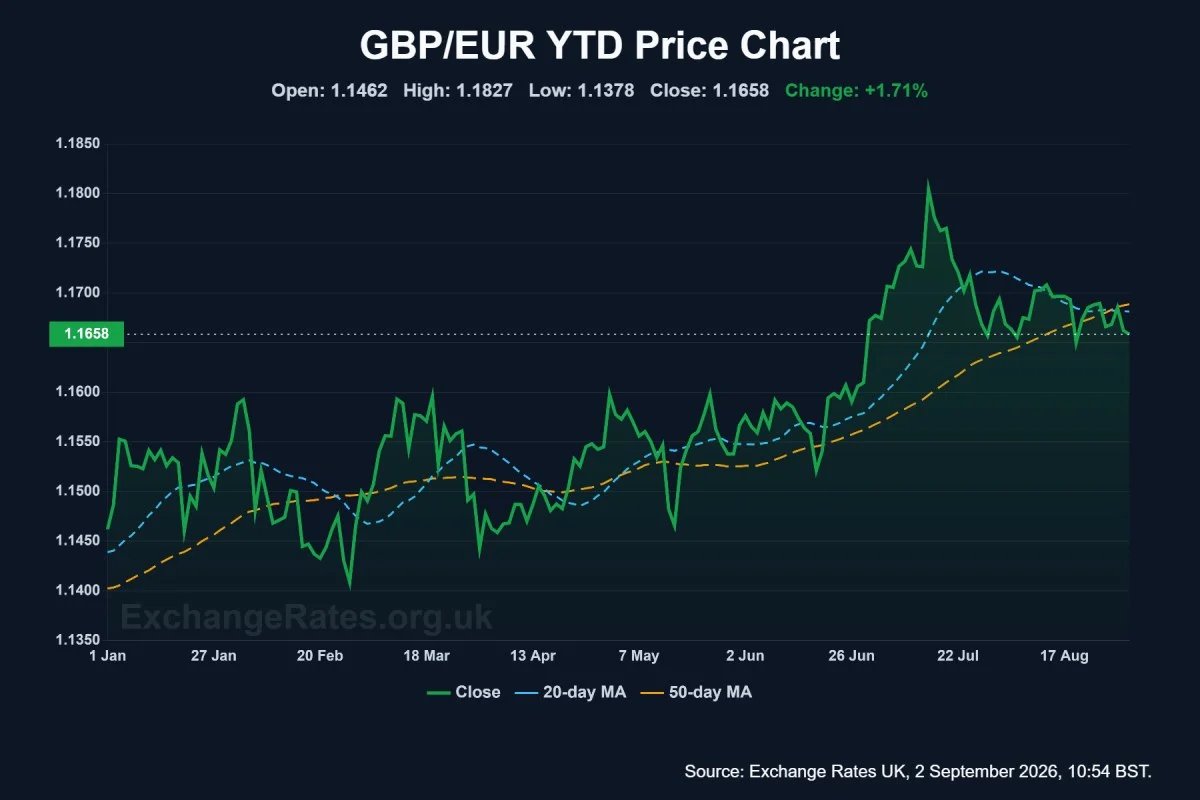
The broader chart still favours Sterling: GBP/EUR is up 1.71% this year, although 1.1658 is below both its 20-day and 50-day moving averages following July’s 1.1827 peak.
No Explicit GBP/EUR Target
UBS offers a relative preference rather than a numerical GBP/EUR forecast, so the argument is best read as support for the Pound rather than a promise of a particular exchange rate.
Its growth assumptions are also constructive:
“Eurozone and UK growth continue to outperform expectations, as higher borrowing costs have had limited impact on activity and higher energy prices have yet to materially weigh on growth (we forecast Eurozone GDP growth of +0.8% in 2026, +1.2% in 2027, and UK: +1.1% in 2026 and 2027).”
The next UK inflation and wage releases, the BoE decision and the ECB’s September meeting will determine whether GBP/EUR can retake 1.17 or extends its pullback.
Our currency coverage draws on live market data, official economic releases and published bank research.