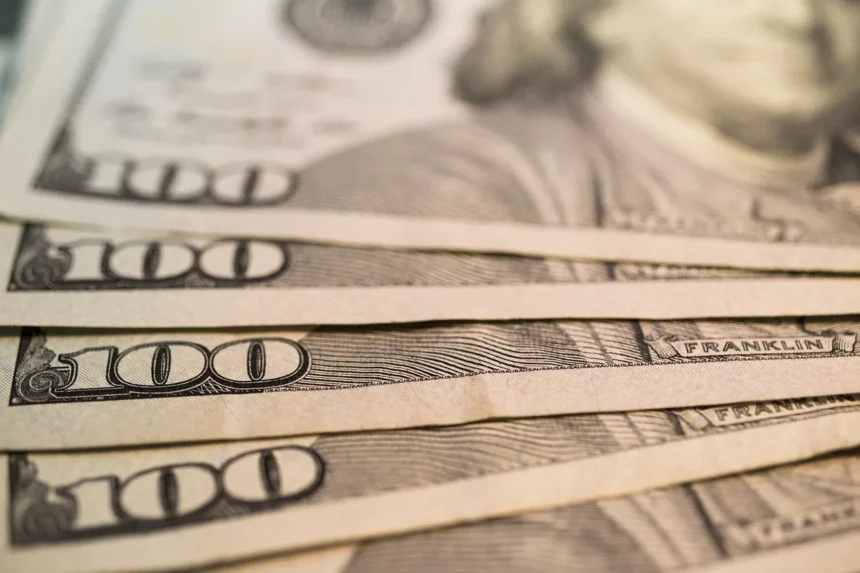
Tashkent, Uzbekistan (UzDaily.uz) — Foreign currency supply on Uzbekistan’s domestic foreign exchange market grew faster than demand in January–September 2026. Excluding Central Bank transactions, supply increased by 25.3% year on year to US$43.8 billion, while demand rose by 17.9% to US$50.4 billion, the Central Bank of Uzbekistan reported.
Legal entities accounted for the bulk of demand, at US$39.4 billion, while individuals accounted for US$11 billion. On the supply side, US$22.8 billion came from legal entities and banks, US$18.9 billion from individuals, and a further US$2.2 billion from international financial institutions and foreign direct investment.
The difference in growth rates was particularly pronounced among legal entities: their demand for foreign currency increased by 15.3%, while supply rose by 26.7%.
Export earnings of businesses grew by 28.1% over the nine-month period to US$16.6 billion. Of this amount, US$9.5 billion, or 57.2%, was sold on the domestic foreign exchange market. This was 33%, or nearly US$2.4 billion, more than in January–September 2025.
Another source of foreign currency supply was the positive balance of transactions between individuals and banks. Residents sold US$18.9 billion to commercial banks, 1.2 times the amount recorded a year earlier. International money transfers brought US$15.2 billion into the country, with a positive balance of US$13.2 billion.
Additional liquidity generated by the Central Bank’s transactions involving monetary gold was sterilised through foreign exchange operations conducted in line with the neutrality principle, as well as other monetary policy instruments.
Over the nine months, the soum traded within a range of 11,765–12,320 soums per US dollar. At the end of September, the exchange rate stood at 11,821 soums, representing a 1.5% appreciation since the beginning of the year. According to the regulator, exchange rate movements were influenced by domestic market supply and demand, broader macroeconomic trends and external economic conditions.
The Central Bank has developed a strategy for operations and interventions in the domestic foreign exchange market for 2026–2030. It envisages further development of market-based exchange rate formation, a greater role for banks and alignment of the regulator’s operations with international practices.
Since 10 August, trading on the currency exchange has been extended until 5:00 p.m., compared with the previous closing time of 3:00 p.m. This allows banks to manage foreign currency liquidity more effectively throughout the day and ensure uninterrupted processing of clients’ foreign currency payments.
Since 15 September, the official exchange rate has been calculated as a weighted average based on both exchange-traded and over-the-counter interbank transactions, rather than exchange transactions alone. In addition, the rate announced on the last working day is now applied on weekends, including Saturdays and Sundays.