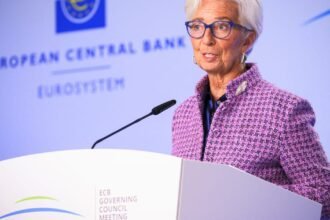

The median rate of perceived inflation over the previous 12 months increased to 4.1 per cent from 3.6 per cent in September, its highest level since July 2024. Median expectations for inflation over the next 12 months rose to 3.5 per cent from 3.1 per cent, though they remained below the 4.0 per cent level reached at the start of the conflict in March 2026.
Euro area consumers’ perceived inflation over the past 12 months rose to 4.1 per cent in October, while one-year inflation expectations increased to 3.5 per cent, according to the ECB.
Expected nominal income growth fell to 0.6 per cent, while expected spending growth was unchanged at 3.7 per cent.
Growth expectations improved to -1.3 per cent and the unemployment-rate outlook eased to 11.
Longer-term inflation expectations moved less. Median expectations for inflation three years ahead increased to 3.0 per cent from 2.9 per cent, returning to the March 2026 level, while expectations five years ahead were unchanged at 2.5 per cent for a third consecutive month, the highest level since the series began in August 2022. Uncertainty about inflation expectations over the next 12 months increased for a second straight month and stayed above the level seen before the start of the conflict in the Middle East.
Respondents in the bottom income quintile continued to report higher inflation perceptions and expectations, on average, than those in the top quintile. Younger respondents aged 18-34 continued to report lower inflation perceptions and expectations than respondents aged 35-54 and 55-70, the survey showed.
Consumers’ expectations for nominal income growth over the next 12 months fell to 0.6 per cent from 1.1 per cent in September. The decline was seen across all income quintiles and was most pronounced in the bottom income quintile, down 0.7 percentage points to 0.8 per cent, and in the top quintile, down 0.8 percentage points to 0.4 per cent. Perceived nominal spending growth over the previous 12 months rose to 5.4 per cent from 5.3 per cent, while expected nominal spending growth over the next 12 months was unchanged at 3.7 per cent, the ECB said in a press release.
Expectations for economic growth over the next 12 months improved to -1.3 per cent from -1.5 per cent in September. Expectations for the unemployment rate 12 months ahead fell to 11.0 per cent from 11.3 per cent. Households in the bottom income quintile expected the highest unemployment rate 12 months ahead, at 13.3 per cent, while those in the top income quintile expected the lowest rate, at 9.5 per cent.
Consumers continued to expect the future unemployment rate to be only slightly above the perceived current unemployment rate of 10.4 per cent, indicating a broadly stable labour market outlook in the survey. Quarterly data showed mixed labour-market sentiment: unemployed respondents reported a lower expected probability of finding a job over the next three months, at 29.6 per cent in October compared with 30.8 per cent in July, while employed respondents reported a lower expected probability of job loss, at 9.4 per cent compared with 9.8 per cent in July.
The net percentage expecting tighter credit conditions over the next 12 months also increased compared with September, reaching its highest value since October 2023. Quarterly data showed the share of consumers who reported applying for credit during the past three months rose slightly to 14.4 per cent in October from 14.3 per cent in July.
Fibre2Fashion News Desk (SG)