
The Indian rupee fell past 90 per US dollar to a record low on Wednesday, extending losses for the sixth consecutive session, pressured by punitive US tariffs, persistent foreign portfolio outflows and sustained dollars buying by banks.
The currency slipped to an all-time low of ₹90.28 per dollar on December 3, 2025, and was last trading at ₹90.24, down 0.4% from the previous close. With a 5.3% year-to-date (YTD) drop, the rupee is headed for its sharpest annual decline since 2022, making it Asia’s worst-performing currency so far this year.
This comes even as the dollar index — which measures the greenback against six major currencies — was down 0.18% at 99.17.
Market analysts attribute the weakness in rupee and domestic equities to heightened uncertainty around the India-US trade deal.
“The Indian rupee weakened to a fresh record low due to strong dollar demand, pressure from FII outflows, and weak global risk sentiment. Higher US interest rates continue to favour dollar assets. Meanwhile, domestic dollar demand from oil companies and other importers has added to depreciation pressures,” said Swapnil Aggarwal, Director, VSRK Capital.
A combination of these factors have created a supply-demand imbalance in the foreign exchange market, leading to depreciation pressures on the local currency, he added.
Here are the five major factors driving the rupee’s slide:
Delay in India-US Trade Deal
India remains among the few large economies without a trade agreement with the US. While officials remain optimistic, the prolonged delay has weighed heavily on the rupee.
Steep US tariffs — as high as 50% — have hit India’s export competitiveness in its largest market. This has not only hurt trade but also dampened foreign investor appetite, contributing significantly to the rupee’s 5% YTD decline.
Persistent FII Outflows
Foreign investors have withdrawn nearly $17 billion from Indian equities so far this year. Additionally, net FDI inflows and overseas commercial borrowings have remained muted, intensifying pressure on the rupee.
The FPI selling has widened the demand-supply gap for foreign currency, accelerating depreciation.
Widening Current Account Deficit
A robust Q2 GDP growth data failed to support the currency, as concerns resurfaced around India’s widening current account deficit (CAD).
India’s CAD stood at $12.3 billion (1.3% of GDP) in Q2 FY26. At the same time, record-high gold and silver prices have inflated the import bill, and elevated US tariffs continue to drag exports.
Limited RBI Intervention
According to Aggarwal, while the Reserve Bank of India (RBI) is likely to step in to manage the situation, its intervention may remain limited.
“The central bank’s focus is expected to be on preventing sharp and sudden volatility rather than defending any specific level of the rupee. As a result, some fluctuation in the currency may continue in the near term,” said Aggarwal.
This calibrated stance has allowed the rupee to adjust gradually in line with global market dynamics.
RBI Rate Cut Expectations
The RBI’s Monetary Policy Committee (MPC) began its meeting on Wednesday, with the interest rate decision due on December 5, ahead of the US Federal Reserve’s decision on December 10.
Market participants believe a repo rate cut by the RBI could trigger further rupee selling, widening the interest-rate differential and making Indian assets less attractive to foreign investors.
Technicals
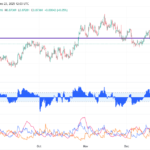
From a technical standpoint, the USDINR pair has delivered a strong weekly breakout above 89.64, signalling renewed bullish momentum, said Ajay Kedia, Director, Kedia Advisory.
“The pair has completed a large cup-and-handle formation, with price surging toward the 161.8% Fibonacci extension at 90.02, which has now been tested successfully. Sustained trading above 88.73 keeps the trend firmly positive. The next upside target lies near the 200% Fibonacci level at 91.50, while support levels remain at 89.64 and 87.63,” said Kedia.
A strong price movement indicates continued strength in the pair, suggesting the rupee may stay under pressure in the near term as USD demand persists, he added.
Amit Pabari, MD, CR Forex Advisors expects USD/INR to trade between 88.90 and 90.20 for now, and the 88.80 – 89.00 band continues to act as a firm support zone.
“A clean break below 89.00 would be the first real sign that the rupee is finally ready to pull back and gather strength. Until then, 90 remains the wall to watch. It’s technical, it’s psychological, and it’s where the market wants to test the RBI’s resolve,” said Pabari.
Disclaimer: The views and recommendations made above are those of individual analysts or broking companies, and not of Mint. We advise investors to check with certified experts before making any investment decisions.