Unlock the Editor’s Digest for free
Roula Khalaf, Editor of the FT, selects her favourite stories in this weekly newsletter.
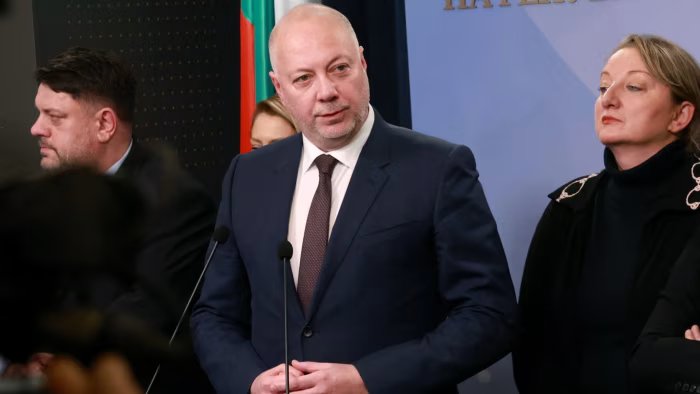
Bulgaria’s Prime Minister Rosen Zhelyazkov handed in his government’s resignation on Thursday, following a wave of anti-corruption street protests, just three weeks before the country is set to join the euro.
Zhelyazkov announced his resignation on television minutes before parliament was due to hold a vote of confidence in his unpopular pro-European government — the sixth such vote since his government took power in January.
The resignation, which will not stop Bulgaria’s entry to the euro on January 1, followed days of mass protests across the country that have been fuelled by growing public frustration among many Bulgarians who believe membership of the EU — which it joined in 2007 — has failed to deliver any improvement in the rule of law.
“Power stems from the voice of the people,” Zhelyazkov said when he announced the government’s decision to step down. “Our coalition met, we discussed the current situation, the challenges we face and the decisions we must responsibly make.”
The protests, which started in November, were sparked by a proposed 2026 budget plan, the first to be drafted in euros. Demonstrators and opposition parties said they were protesting against planned tax rises on the private sector and increased channelling of funds to the state.
Zhelyazkov withdrew the budget last week, but protests continued in the Balkan country of 6.5mn people, which has held seven national elections in the past four years.
Zhelyazkov’s minority government is backed by multiple factions across the political spectrum — among them the DPS-New Beginning party of Delyan Peevski, a former media tycoon hit with sanctions by the US and the UK for corruption. Peevski denies the accusations.
President Rumen Radev, a pro-Russia former general, will now ask parliament to try to form a new government. If they cannot, Radev will assemble an interim administration until new elections are held.
The European Commission had long warned about Bulgaria’s lack of application of the rule of law. In a scathing July report, it said: “The level of perceived judicial independence in Bulgaria continues to be very low . . . the National anti-corruption strategy remains limited . . . important gaps remain in the rules on the integrity of persons with top executive functions.”
Bulgaria was approved to join the Eurozone in July, after repeated delays due to political instability and missed inflation targets. Zhelyazkov had touted euro adoption as one of his government’s major achievements.
However, a July poll showed that almost half of Bulgarians remained sceptical of the move, amid concerns about high inflation and centralisation of power in Brussels and Frankfurt. Zhelyazkov has accused Russia of fanning disinformation campaigns including about Bulgaria’s accession to the euro.
European Central Bank president Christine Lagarde and EU economy commissioner Valdis Dombrovskis sought to allay some of those worries during a pro-euro charm offensive in Sofia last month.
“It’s important to close ranks and to be together,” Lagarde said during the visit.
“It is not a secret that Russia is waging a hybrid war against Europe and European member states . . .[that] it is spreading disinformation,” Dombrovskis said when asked about alleged Russian influence operations.