(Bloomberg) — The pound’s resilience faces a test from Britain’s upcoming budget if the government’s spending restraint comes at the cost of slower economic growth.
Most Read from Bloomberg
Morgan Stanley strategists reckon sterling is “priced to perfection,” and warn investors may have become too optimistic about the budget. They expect the currency to weaken to $1.30 by year-end — from around $1.33 at present — and see further depreciation next year.
Several other strategists share that caution, as Chancellor of the Exchequer John Healey prepares to unveil what’s widely expected to be a fiscally conservative budget on Wednesday. BBVA SA and Credit Agricole CIB strategists are among those who expect sterling at $1.31 by year-end, and even see it weakening against the euro, which has been battered by France’s bond-market turmoil.
Healey’s focus on cutting the deficit should please bond investors and bring gilt yields down from recent multi-decade highs. The trade off is that growth-boosting measures are likely to take a back seat, sapping business momentum and potentially leaving the pound to pay the price.
“Fiscal consolidation would come at the cost of a weaker growth outlook,” said Roberto Cobo Garcia, head of G10 currency strategy at BBVA. “That combination limits the scope for a positive sterling reaction.”
UK PREVIEW: Healey vs. Markets – What’s at Stake in Budget
Signs of caution are already showing up in the options market, which suggests sterling may struggle to break above its recent highs after the budget. Options betting on the pound to drop against the dollar account for two-thirds of market volumes, figures from the figures from CME Group and Depository Trust & Clearing Corporation show.
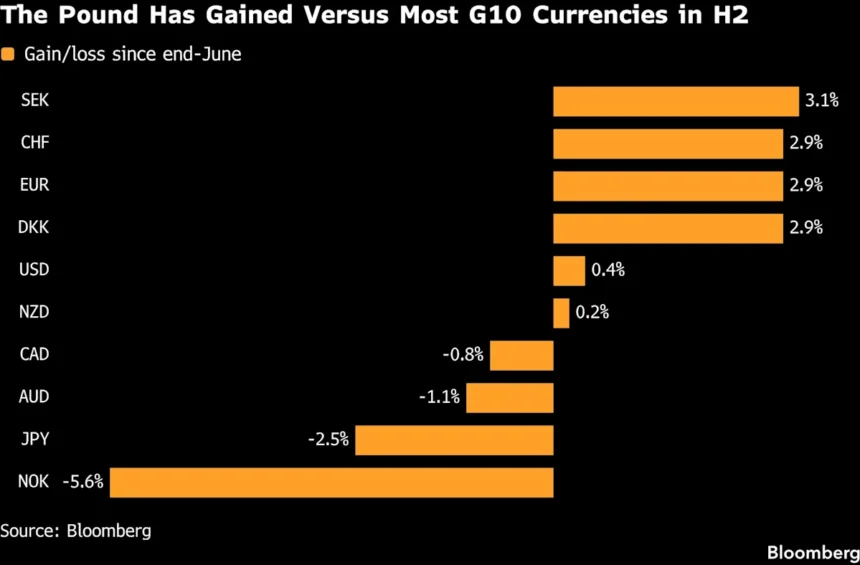
Sterling’s recent strength may be overstated — much of this month’s advance has come against the euro, which has been hurt by France’s bond turmoil and student unrest.
The currency has also received support from Britain’s surprisingly resilient economy. S&P Global’s purchasing managers index this week showed private-sector activity expanding at the fastest pace in eight months, while monthly figures have pointed to steady economic expansion. But as households buckle under high energy prices, that source of support may be fading for the pound.