British Pound climbs as UK inflation keeps BoE hike bets alive
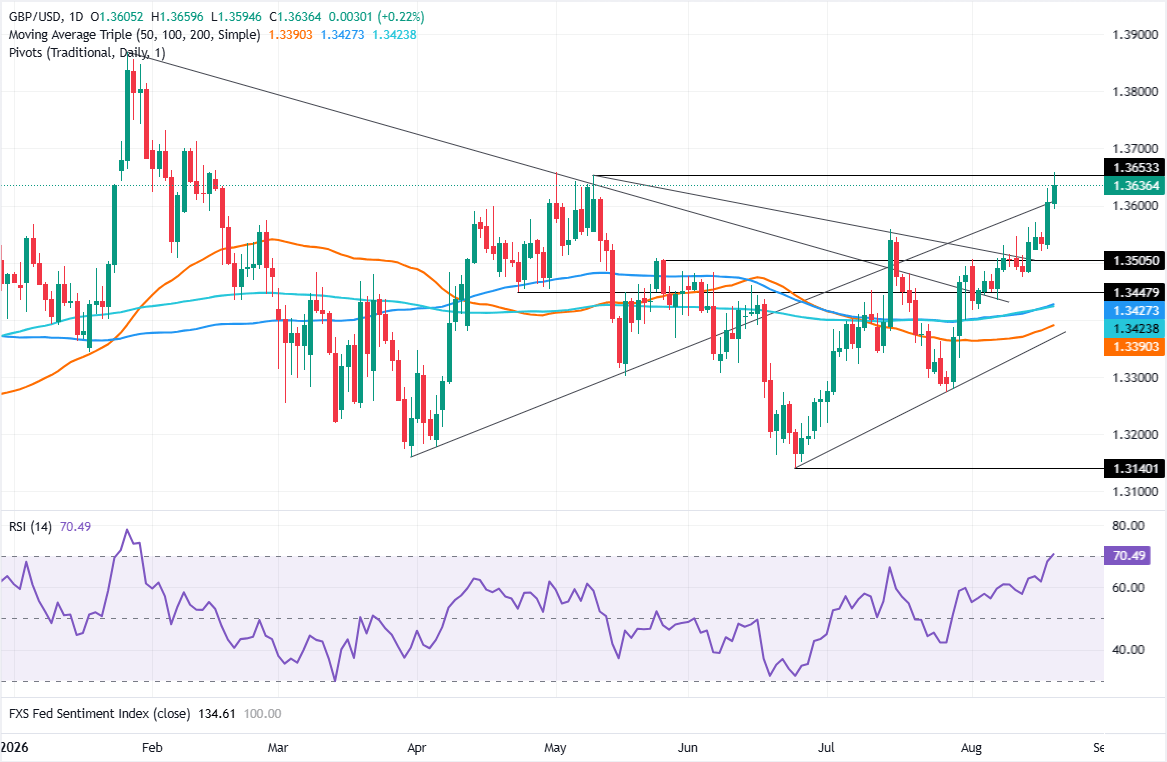
The Pound Sterling (GBP) advances on Thursday during the North American session, up 0.25% after US economic data showed that the labor market remains solid, despite a weaker Nonfarm Payrolls in July. The GBP/USD pair trades at 1.3639 after reaching a daily high of 1.3659, its highest level since February.
The Greenback has recovered some ground after posting losses, following the US Department of the Treasury’s announcement of a bond buyback program. The Treasury’s goal is to provide liquidity for the long end of the curve, but markets interpreted the move as a form of Yield Curve Control (YCC). Read more…
British Pound: Sustained break above 1.3650 may open 1.41 – Scotiabank
Scotiabank strategists Shaun Osborne and Eric Theoret note that GBP/USD gains into the mid-1.36s are driven more by US Dollar (USD) weakness than intrinsic British Pound (GBP) strength, though United Kingdom (UK) survey data show improving manufacturing orders and pricing power. Technically, Cable has met the near-term objective of retesting the May peak, and a sustained move above 1.3650/60 is seen implying scope for an extension towards 1.41 this year.
“Sterling gains to the mid-1.36s largely reflect our general outlook for the pound but the story is clearly more about USD weakness than GBP strength at the moment.” Read more…
British Pound gains as US Dollar softens on Treasury bond buybacks
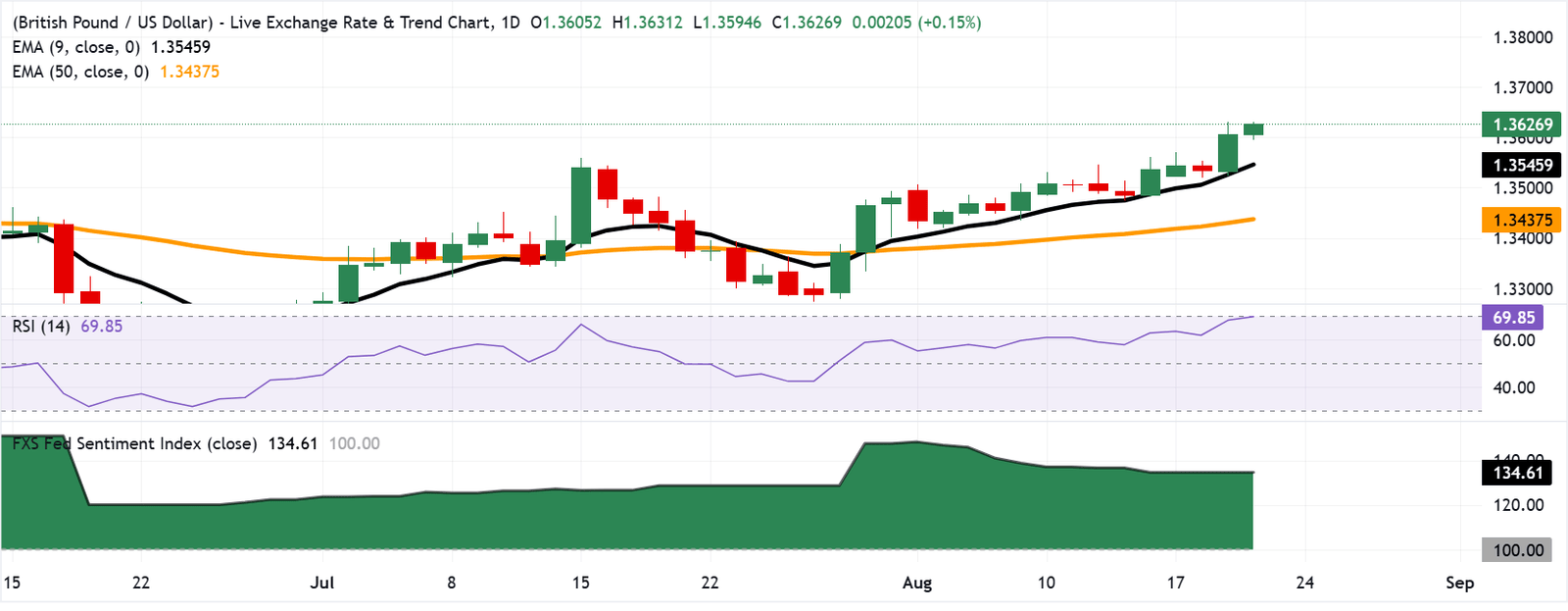
GBP/USD extends its gains for the second successive day, trading around 1.3630 during the European hours on Thursday. The pair appreciates as the US Dollar (USD) faces challenges, driven by the decision of the US Treasury Department to stabilize domestic bond markets.
US Treasury announced plans to curb surging yields and alleviate market liquidity concerns by doubling its buyback operations for long-dated securities maturing in 10 to 30 years. This increased intervention aims to cap long-term borrowing costs and enhance overall global US Dollar liquidity, which could ultimately exert downside pressure on the currency moving forward. Read more…