

UK inflation rose to 2.9% in July, but softer services prices kept the Bank of England outlook steady and left Pound Sterling little changed.
The Pound to Dollar (GBP/USD) exchange rate edged higher towards 1.3552 after the UK inflation release, while GBP/EUR slipped to around 1.1686 as traders found little in the figures to force a rethink on interest rates.
Headline CPI accelerated to 2.9% in July from 2.6% in June, matching the consensus, while core inflation held at 2.6% rather than easing to the expected 2.5%.
Services inflation, arguably the more important number for the Bank of England, slowed to 3.4% from 3.6%. Sterling and UK bond futures showed little immediate reaction.
Pantheon Macroeconomics summed up the release neatly: “Little news as airfares undershoot but VAT cuts fail to feed through; inflation is heading to around 3.5% in November.”
The headline increase was more than explained by the July rise in Ofgem’s household energy price cap, with softer food and motor-fuel inflation offsetting part of that boost.
There were a few hawkish details lurking underneath.
UK economists at Pantheon noted that “services inflation would have exceeded consensus without weaker-than-expected airfares, which will likely catch up in August.”
Its measure of underlying services inflation, stripping out volatile and government-set prices, increased to 3.7% from 3.6%.
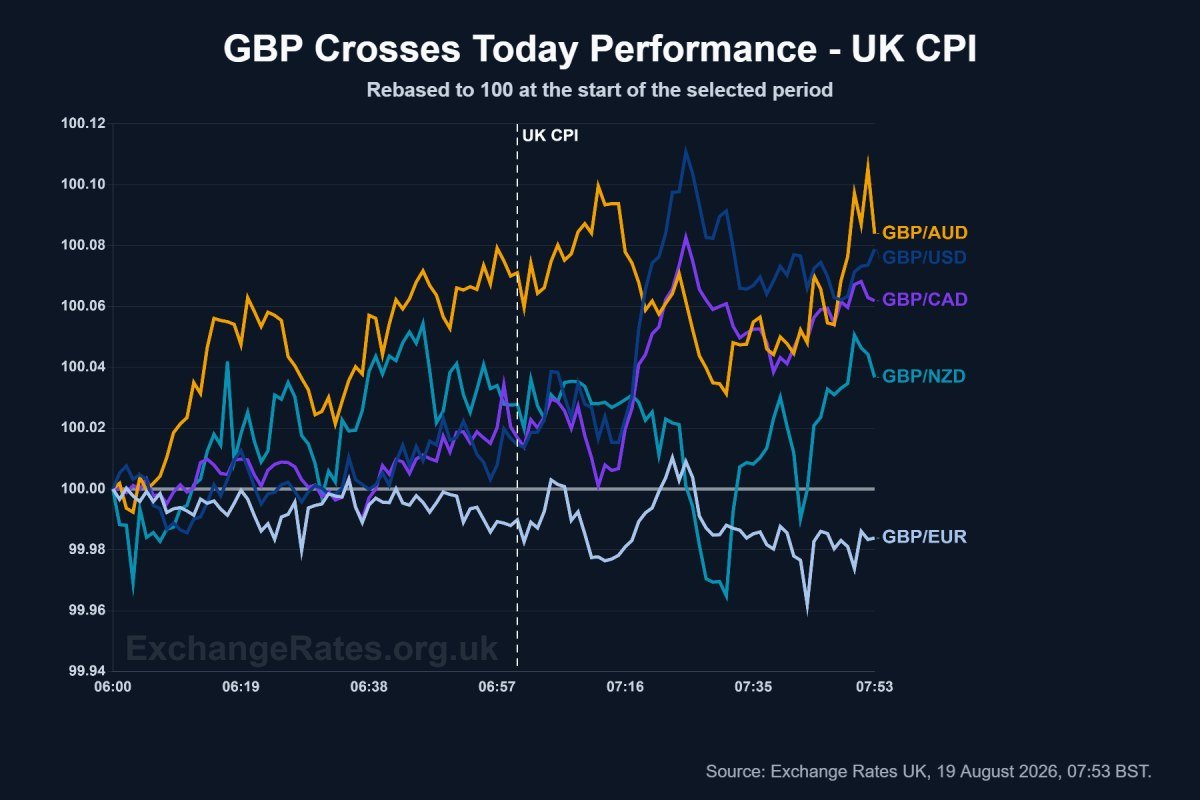
Pound Sterling’s response was restrained after the 07:00 release, with GBP/USD and several commodity-currency crosses edging higher while GBP/EUR remained slightly softer.
Bank of England Outlook: Still a Case for Patience
The slight core inflation overshoot was balanced by evidence that domestic price pressure is not accelerating dramatically.
Lloyds said: “This report shouldn’t nudge the MPC from its current steady stance, particularly with softish labour market running in the background, which is dragging on private sector wage growth.”
It added: “There is no evidence of any second-round effects from the energy price increase.”
That distinction matters.
The Bank of England held Bank Rate at 3.75% in July, with three MPC members voting for an increase, and its central projection already envisages inflation moving above 3% later this year.
Pantheon is somewhat more cautious on the near-term profile, expecting inflation to reach around 3.5% in November as food and core-goods pressures strengthen.
Lloyds also expects inflation to climb further over the next few months, but sees the path turning lower again around October.
There was another interesting wrinkle in the VAT data.
Pantheon had expected temporary cuts to feed more clearly into catering, recreation and cultural prices.
Instead, firms appear to have retained more of the benefit in margins, which means there should also be less of an inflation rebound when those cuts unwind in September.
Not exactly a clean dovish signal, but hardly the inflation shock that would force the MPC’s hand either.
For Pound Sterling, the main take is: headline inflation is rising, underlying services pressure is easing, and the next decisive move probably needs more than July CPI.