

The Pound Sterling held steady against the Euro and US Dollar after the latest UK jobs report showed further cooling in employment and private-sector wage growth, reinforcing expectations that the Bank of England will have little need to raise interest rates this year.
UK Unemployment Holds at 4.9%, but the Data Shows More Cooling
The UK jobs market has cooled to healthy levels where it is no longer an inflationary driver.
The data is on the weak side, but as long as it holds steady, it is not dangerously weak.
Rate hikes look unlikely based on the jobs data, but this week’s inflation data could have more of an influence.
This week’s data will be important for the British pound and for BoE policy as CPI will be released on Wednesday and is expected to rise slightly.
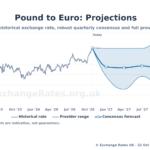
Another notable release came on Tuesday, with the employment report, which showed further cooling, although nothing significant enough to move the pound, which stayed unchanged against the euro at 0.855.
UK Employment Report
The unemployment rate held steady at 4.9% in the three months to June, against expectations of a fall to 4.8%.
Employment rose by 83,000 over the same period, well short of the consensus forecast near 129,000 and the weakest rise in five months.
Vacancies dropped to 707,000 in the three months to July, the lowest level since 2021 and, excluding the pandemic period, the weakest since late 2014.
Private sector regular pay growth slowed to 2.8% in the second quarter, the softest reading since late 2020, while overall regular earnings growth edged up to 3.5%, boosted by public sector awards. Payrolled employee numbers continued to edge lower.
ONS Director of Economic Statistics Liz McKeown summed it up by saying the labour market picture is little changed overall, with some softening still evident. ING observed that the basic story here is that the jobs market is cool.
“Ongoing weakness in private-sector hiring and wage growth suggests the bar is still relatively high for a rate hike in 2026, barring a severe and prolonged spike in energy prices. We expect the Bank of England to remain on hold this year and resume rate cuts from spring 2027.”
Sterling reacted initially with a modest decline.
GBPUSD slipped around 0.1% to near 1.352 after earlier trading higher, while EURGBP also saw the euro edge up slightly against the pound.
The move reflected reduced expectations for near-term Bank of England tightening, even as markets still priced in roughly 30 basis points of rate increases by the end of 2026.
Gilt yields were little changed on the day as the data reinforced a wait-and-see stance, while UK stocks were broadly flat at the open, with the FTSE 100 showing limited reaction amid broader focus on oil prices and Middle East tensions.
The figures reduce the case for an early BoE rate rise.
Private sector pay growth matched the Bank’s own recent forecast, and the gradual easing in vacancies and employment growth points to contained domestic inflation pressure for now.
Most policymakers are expected to keep rates on hold at the next meeting, with the central bank still assessing whether higher energy costs linked to the Iran conflict will feed into bigger pay settlements later in the year.
The picture could change rapidly with Wednesday’s CPI release, which is a more direct influence on BoE policy and therefore the pound.
Headline CPI is expected to rise to 2.9%, which is far from ideal, but can be shrugged off because of higher oil prices.
The key figure will be the core measure, which is expected to stay fairly steady at 2.5%.
Should it come in hot, there could be some concern that higher energy costs are filtering through to other components and that could have a more long-lasting effect.
Consequently, the BoE would be more inclined to hike rates, and that could add some support to Sterling.