
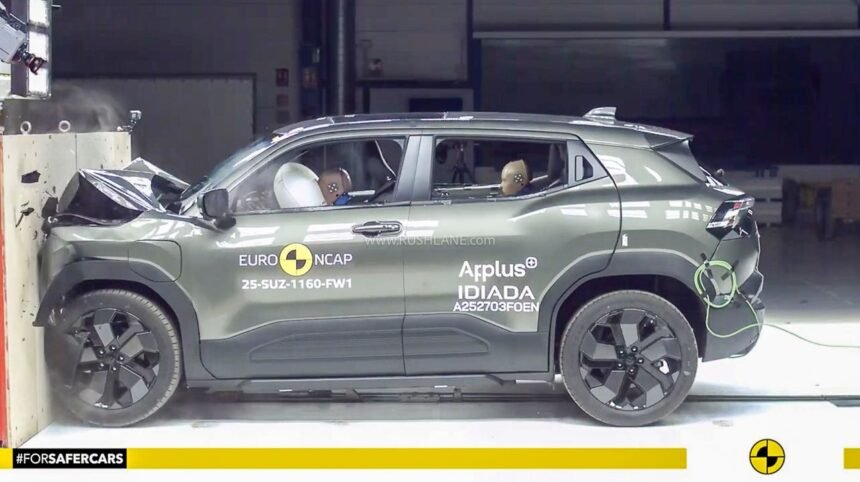
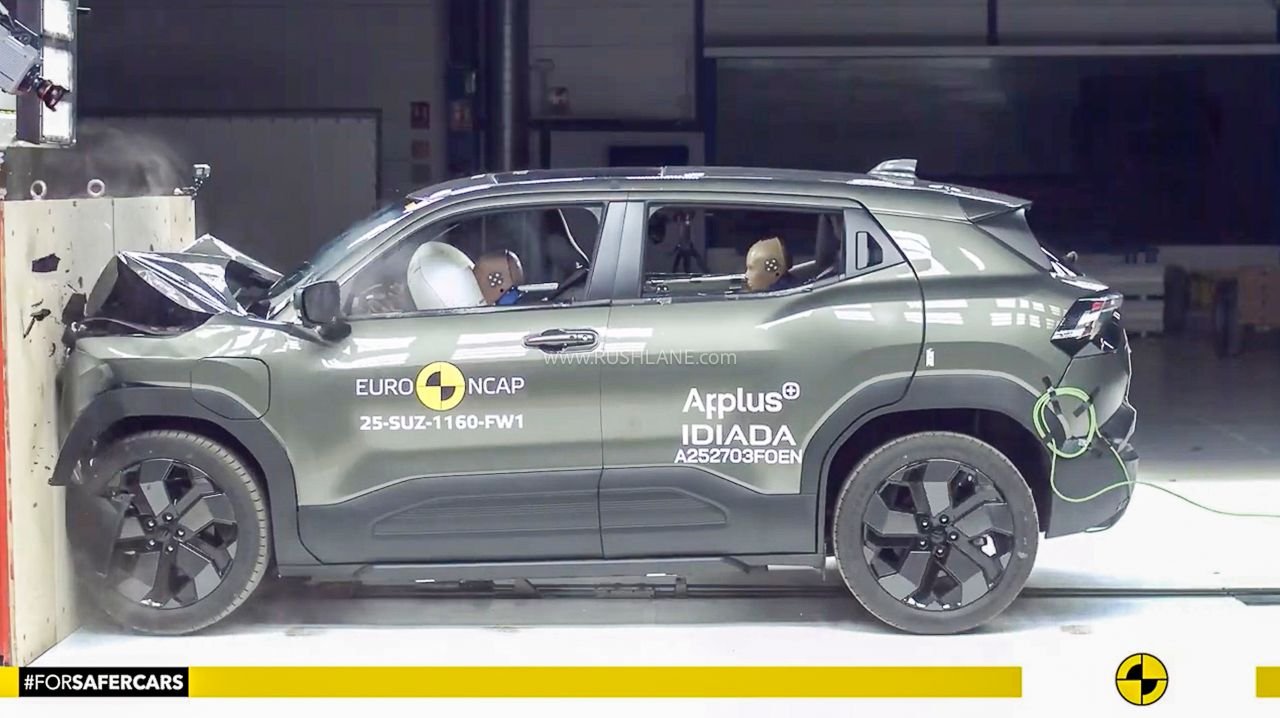
New 2026 Euro NCAP protocols are focused on four key stages – safe driving, crash avoidance, crash protection and post-crash safety
Based on research data and consumer feedback, Euro NCAP has introduced significant updates to its 2026 safety assessment protocols. This is the biggest update for Euro NCAP since the time the overall rating system was introduced in 2009. The changes include a major overhaul of vehicle testing procedures and the scoring system. The idea is to make the protocols meet practical needs in real-world environments and not just look good in theory. Let’s check out the details.
Safe Driving – Physical buttons get priority
As per the new 2026 Euro NCAP protocols, more points will be given to vehicles that have physical buttons for commonly used functions. The overall marks will depend on ease of use of physical buttons, wherein factors like placement and clarity will be considered. This approach aims to reduce driver distraction.
Emphasis is also being given to monitoring technologies, which can monitor driver performance in real time. Higher ratings will be given to systems that not only track eye and head movements continuously, but also use this info to adjust the sensitivity of driver assistance systems. Additional marks will be given to systems that can automatically detect any impairment caused by drugs or alcohol.
In case the driver becomes unresponsive, the monitoring systems should be able to bring the vehicle to a safe halt. This will also fetch additional marks. Similarly, systems that can detect proper usage of seatbelts can earn higher scores. The restraint and airbag systems are expected to adapt effectively to the safety needs of people with varying physiques.
Crash avoidance – Reducing ADAS warnings, unwanted interventions, pedal misapplication
As per the 2026 Euro NCAP protocols, crash prevention systems will undergo more rigorous testing. This will include ADAS systems such as Lane Support and Autonomous Emergency Braking. The focus will be on evaluating real-world scenarios, where other entities could be involved such as cyclists, pedestrians and powered two-wheelers.
Points will be deducted if the ADAS systems are found to carry out any intrusive or unpredictable interventions. This is one of the common issues reported by users. Lane support systems are expected to deliver a smooth and intuitive driving experience. Additional points will be given if the car has the capability to detect pedal misapplication. A relevant example is pressing the accelerator instead of the brake. This will be part of the new low speed collision tests, which also includes Cyclist Dooring.
Crash protection – Enhanced safety for varying passenger body types
2026 Euro NCAP will be using sled testing and advanced virtual simulations. This approach will ensure that the new protocols can present a better picture of the safety assessments of a wider range of driver and passenger body types. It will also help gain a better understanding of safety risks across different age groups such as children and older occupants. Risk of injury to pedestrians will be analysed more thoroughly, especially the impacts around the windscreen.
Post-crash safety – Accurate information for first responders
In this stage, Euro NCAP new protocols will focus on ensuring timely help to the occupants in the event of a crash. One of the key aspects to be considered is the operability of the electrically powered exterior door handles. These should remain operable in the event of a crash, allowing easy access for first responders. In case of electric vehicles, there should be proper isolation of the high-voltage battery.
Automated emergency notifications, in the event of a crash, are expected to provide clear information about the number of occupants. This should be accurate even if any passenger is not wearing their seat belt. Such systems will be useful for first responders. In the case of electric vehicles, the driver should be notified about a potential battery fire risk after a crash. Such timely warnings will help reduce injuries and save lives.
Bharat NCAP 2.0 incoming
In India too, the Bharat NCAP protocols are being planned for a major update. As per the draft proposal, crash-test rules will be tightened and higher marks will be awarded for advanced safety technologies and stronger build quality. Similar to 2026 Euro NCAP, the Bharat NCAP 2.0 will also focus on factoring in real-world scenarios. Ratings will be based on five verticals, as compared to the current standards that are limited to adult and child occupant safety, and basic safety assist features. Bharat NCAP 2.0 is scheduled to come into effect from 2027.